
Last Updated: November 16, 2026
Quick Summary
Used shipping containers are steel cargo boxes sold secondhand for storage, job-site offices, or modification, and size and grade decide what you actually get. Shop by 20-foot, 40-foot, high-cube, or standard configuration, and insist on wind and water tight condition for anything you store. Compare total delivered cost, not the listing price.
- Wind and water tight means doors seal, the roof holds, and the floor is sound.
- The total delivered cost covers the container, delivery distance, unloading equipment, and taxes.
- Check the floor and door seals first, because fresh paint hides rust.
- A container under $1,000 may be as-is with a soft floor or leaking roof.
- Confirm access, ground, clearance, unloading, and permits before you order the box.
Table of Contents
- Sizes, Grades, and What You’re Actually Buying
- How Much Should a Used Shipping Container Cost?
- The Inspection Checklist Before You Pay
- Finding Used Shipping Containers for Sale Near Me
- Are Shipping Containers Under $1,000 Worth Buying?
- 20 Foot Shipping Container for Sale Near Me: What to Expect
- Delivery, Site Prep, and Permits You Need to Sort Out
- Request a Quote from K3 Containers
- Frequently Asked Questions
Sizes, Grades, and What You’re Actually Buying
A used shipping container is a steel cargo box built to survive ocean freight, sold secondhand for storage, job-site offices, or modification. When buyers shop for used shipping containers for sale, size and grade decide what they’re actually getting. The market runs on a handful of standard configurations, and knowing them keeps you from overpaying for the wrong box.
20-Foot, 40-Foot, and High-Cube Configurations
The 20-foot container is the workhorse for tight lots and heavy tools, and it fits where a 40-foot box won’t. The 40-foot container doubles your storage capacity and suits inventory overflow, machinery, and feed. The high-cube container adds about a foot of interior height, which matters if you’re racking shelves or planning a custom build. Standard containers keep the conventional height. Pick the size that matches your access road and your load, not the one that looks cheapest per square foot.
Used Condition Grades and Wind-and-Water-Tight Standards
Wind and water tight means the container keeps rain and wind out: doors seal, the roof holds, and the floor is sound. That’s the minimum grade for anything you’re storing. Cosmetic wear and surface rust are common on used steel containers. What matters most when grading is the seal, the floor, and the frame.
Here are the standard configurations and condition standards the article describes.
| Option | Best for | Key difference |
|---|---|---|
| 20-foot container | Tight lots and heavy tools | Fits where a 40-foot box won’t |
| 40-foot container | Inventory overflow, machinery, feed | Doubles storage capacity |
| High-cube container | Racking shelves or custom builds | Adds about a foot of interior height |
| Standard container | Conventional height needs | Keeps the conventional height |
| Wind and water tight | Anything you’re storing | Doors seal, roof holds, floor sound |
How Much Should a Used Shipping Container Cost?
There’s no single sticker price, and anyone who quotes you one before asking about delivery is guessing. The number that matters is the total delivered cost, not the listing price. Break it into four parts and you can compare sellers honestly.
1. The container itself. Size and grade set the base. Pricing depends on size, grade, and delivery distance, so ask for a quote that reflects your specific needs. Condition drives the spread within a size: a wind-and-water-tight box with a soft floor or leaking roof sits at the bottom, while a cargo-worthy unit with straight frames and intact seals sits at the top. Ask for the grade in writing before you compare two prices.
2. Delivery distance. Delivery distance affects the total cost, since transport is charged separately from the container price. Local delivery within a metro area is a different line item than a 200-mile haul. Always ask whether the quote is pickup price or delivered price; they are not the same figure.
3. Unloading equipment. The truck arrives with the container on the chassis. Getting it off requires either a tilt-bed that slides it to the ground or a crane or forklift at your site. If the seller’s truck cannot unload without equipment you don’t have, you are renting a crane or a forklift, and that cost belongs in your budget before you order. Confirm who unloads and with what.
4. Site access and taxes. A tight gate, low branches, soft ground, or a steep driveway can force a smaller truck, a longer reach, or a rescheduled delivery, and each of those shows up on the invoice. Sales tax and any local fees apply on top. Ask for an itemized delivered quote that lists container, transport, unloading, and tax separately so you can see what you are actually paying for.
Get the delivered number first, then compare containers.
The Inspection Checklist Before You Pay
Run this checklist on any used container before money changes hands. It takes fifteen minutes and saves you a repair bill.
- Doors open and close smoothly, with seals intact and no daylight showing through
- Floor is solid underfoot, with no soft spots, rot, or heavy rust
- Roof shows no holes or pinholes that let water in
- Frame and corner castings are straight, with no cracks
- Interior is dry, with no standing water or musty smell
- Locking bars and handles work and lock properly
- Underside and cross-members are free of heavy corrosion
- Grade matches what the seller advertised
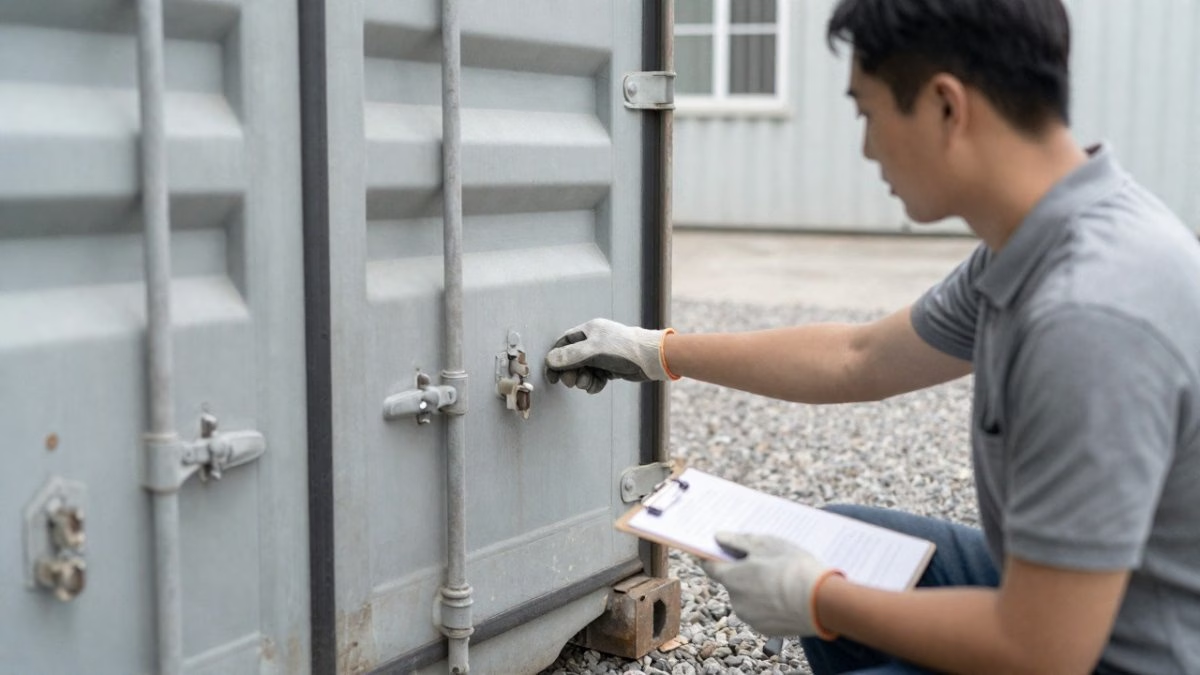
A common mistake is judging a container by its paint. Fresh paint hides rust. Check the floor and the door seals first, because those are the two repairs that cost the most.
Finding Used Shipping Containers for Sale Near Me
Searching “used shipping containers for sale near me” turns up plenty of listings and very little certainty. Local delivery matters more than a national directory, because a container that’s cheap three states away costs more once you move it. Look for a provider with an actual delivery area, transparent pricing, and a way to inspect the unit before you commit. K3 Containers provides local delivery across Central Texas. If a seller only takes wire transfers and won’t let you see the box, walk away.
Are Shipping Containers Under $1,000 Worth Buying?
Sometimes, but rarely without a catch. A container priced under $1,000 may be an as-is unit with issues such as a soft floor, a leaking roof, or doors that no longer seal. For scrap, a shed, or a project box, that can be a fair deal. For storing tools or feed you need dry, it’s a gamble.
Ask what grade it is and inspect it in person. If the seller can’t answer basic questions about the floor and doors, the low price is the warning, not the bargain.
20 Foot Shipping Container for Sale Near Me: What to Expect
A 20-foot container is a practical size for many residential and small-business buyers. It fits on a driveway or a tight job site and moves more easily than a 40-foot. Availability varies, so confirm the grade and condition before you reserve one. For job-site storage during a move or renovation, a 20-foot unit placed where you need it beats a storage unit across town.
Delivery, Site Prep, and Permits You Need to Sort Out
Delivery is where a good purchase goes wrong, and most of the failures are predictable before the truck ever leaves the yard. Walk your site against this list before you order.
Access path. A loaded truck pulling a 20-foot or 40-foot container needs a clear, straight run to the drop spot. Measure the gate width, the driveway, and any turn the truck must make. Low branches, power lines, and overhead wires stop a delivery cold, and a truck that cannot turn around may not be able to leave.
Ground conditions. The container lands on whatever is under it, and a loaded steel box is heavy. Soft soil, fresh fill, or a slope will settle, twist the frame, and throw the doors out of alignment. Our guide to what to put under a shipping container covers gravel, ties, and footings, and the short version is that firm and flat beats decorative every time.
Clearance and placement. Leave room to open the doors fully and to walk around the box. A container placed tight against a fence or building cannot be inspected, repaired, or loaded easily. Decide the door orientation before the truck arrives, because moving a container after it is set is a second delivery charge.
Unloading equipment. The truck brings the container on a chassis. A tilt-bed can slide it to the ground; a standard flatbed needs a crane or a heavy forklift at your site. Ask the seller which truck is coming and who is responsible for unloading. Our guide to container moving costs in Texas explains loaded-mile pricing, travel fees, and site requirements.
Permits and zoning. Rules for placing a container on residential or commercial property vary by jurisdiction. Check with your local planning or zoning office about setback requirements, allowable use, and whether a container counts as a structure. Permit requirements for containers vary, so check with your local planning or zoning office. Get the answer in writing before you buy.
Watch out: ordering delivery before the site is ready is the most common and most expensive mistake we see, because a failed delivery often means a second transport charge and a rescheduled slot.
A common pattern is that buyers sort out the container first and the site last. Reverse that order: confirm access, ground, clearance, unloading, and permits, then order the box that fits the site you actually have.
Request a Quote from K3 Containers
The fastest way to get a real number is a delivered quote. K3 Containers offers new, one-trip, and used 20-foot and 40-foot containers, rent-to-own options, and professional delivery across Central Texas. We also build custom units, including climate-controlled offices and modified boxes with roll-up doors and electrical. Browse used shipping containers for sale to compare conditions and sizes, or read our guide to container grades before you decide. When you’re ready, get a delivered shipping container quote.
The gap between a cheap listing and a sound container is inspection and delivery, and that’s exactly where we help. K3 Containers brings local delivery, honest pricing, and a real inventory of used and new units, plus rent-to-own if you’re not ready to buy outright. Get started with K3 Containers and get a container placed where you actually need it.
Frequently Asked Questions
How much should a used shipping container cost?
Pricing depends on size, grade, and delivery distance, so there is no single figure. Pricing depends on size, grade, and delivery distance. Delivery, tax, and site prep add to the sticker price. K3 Containers lists current prices on its website and provides a free quote so you see the out-the-door number before you commit.
What should I inspect before buying a used shipping container?
Check the door seals for gaps, look for rust along the floor and bottom rails, and confirm the unit is wind and water tight. Walk the roof for soft spots, test the locking bars, and look for bowing in the side panels. Ask for the container’s condition grade and ownership history. A sound used container should show cosmetic wear without structural damage.
Are shipping containers under $1,000 worth buying?
Units listed under $1,000 often need repairs, may have rusted floors, or sit far from your site, which raises delivery cost. They can work for rough storage of materials that tolerate moisture, but not for tools, feed, or machinery. Inspect in person, confirm the unit is wind and water tight, and compare the total delivered cost against a better-grade container.
Does the price of a used shipping container include delivery?
Usually not. Delivery is quoted separately based on distance, truck access, and whether a tilt-bed or crane is needed to place the unit. Tight lots and rural properties may require a site visit first. K3 Containers provides professional delivery and placement across Central Texas, and the quote reflects the actual drop location so there are no surprises.