

Last Updated: November 17, 2026
Quick Summary
Container rental for moving gives you one secure steel box that comes to you, gets loaded at ground level, and stays put until you are ready. Avoid the common mistakes by measuring your load, walking the delivery site, and confirming the rental terms in writing before you book.
- A 20-foot container holds a small home or contractor tool inventory; a 40-foot suits a three-bedroom move.
- Book delivery only after walking the site for firm ground, overhead clearance, and pull-out room.
- Confirm minimum rental period, extensions, cancellation, damage responsibility, and delivery windows in writing.
- Plan modifications like insulation and electrical service before delivery, not after the container lands.
- Set the container on a firm, level, well-drained base so moisture does not rust the floor and base rails.
Table of Contents
- Why Shipping Container Rental for Moving Beats a Truck or Storage Unit
- Mistake 1: Guessing at Container Size Instead of Measuring Your Load
- Mistake 2: Ignoring Shipping Container Delivery Requirements
- Mistake 3: Assuming Rent-to-Own Shipping Containers Work Like a Standard Lease
- Mistake 4: Skipping Custom Container Modifications for a Long-Term Move
- Mistake 5: Forgetting That Ground Contact Ruins the Container and Your Belongings
- Mistake 6: Overlooking Security and Weather Protection for a Loaded Unit
- Requesting Your Container Rental Quote and Site Walkthrough
- Frequently Asked Questions
Why Shipping Container Rental for Moving Beats a Truck or Storage Unit
Shipping container rental for moving gives you one secure steel box that travels with your belongings and can sit on your property as long as you need it. Families and contractors often compare three options, and the container usually wins on flexibility. The reason is simple: a rental truck has to be loaded, driven, and returned on a tight clock.
A storage unit forces you to haul everything twice. A container comes to you, gets loaded at ground level, and stays put until you are ready.
Below, we break down the seven mistakes that cost movers the most money and time, and how to avoid each one. But first, here is what most guides get wrong: they treat container rental as a simple booking. It is really a site planning decision.
Mistake 1: Guessing at Container Size Instead of Measuring Your Load
The biggest size error is ordering by feel instead of by measurement. Walk through your home or shop and list every large item with its dimensions. Then stack the list into a rough cube. A written inventory usually beats a visual guess, because the cube is often different from what you expect.
A 20-foot container holds the contents of a small home or a contractor’s tool inventory. A 40-foot container suits a three-bedroom move or a full commercial fit-out. If you are unsure between the two, compare 20-foot and 40-foot containers by space and access before you book.
Use the following planning assumptions as a starting point, not a guarantee, because furniture bulk and stacking change the math:
- Studio or one-bedroom apartment: a 20-foot container is usually enough when you stack boxes to the ceiling and break down beds and tables. A 40-foot unit leaves room for a workspace or a second storage phase.
- Two-bedroom home: a 20-foot container fits if you are disciplined about bulky items like sofas and mattresses. A 40-foot unit gives you loading aisles and room for appliances.
- Three-bedroom home: a 40-foot container is the common choice, especially when you keep garage contents, patio furniture, and seasonal items in the same load.
- Four-bedroom or larger home: a 40-foot container plus a 20-foot unit, or two 40-foot units, prevents the crush of a single overpacked box.
- Contractor tool inventory: a 20-foot container handles most job-site tool collections; a 40-foot unit suits a full commercial fit-out with materials and equipment.
Measure your driveway gate and turning radius too. A container that fits your load but not your lot is a wasted booking.
Watch out: sizing by square footage alone is the most common planning error. A 1,200-square-foot home full of bulky furniture can need more container space than a 1,800-square-foot home with minimal furnishings, so build the inventory list before you choose a size.
Here is how container sizes map to common loads, based on the article’s planning assumptions.
| Load | Container size | Note |
|---|---|---|
| Studio or one-bedroom apartment | 20-foot | Enough when boxes are stacked to the ceiling |
| Two-bedroom home | 20-foot | Fits if disciplined about bulky items |
| Three-bedroom home | 40-foot | Common choice, including garage and patio items |
| Four-bedroom or larger home | 40-foot plus 20-foot, or two 40-foot | Prevents a single overpacked box |
| Contractor tool inventory | 20-foot | Handles most job-site tool collections |
| Full commercial fit-out | 40-foot | Suits materials and equipment |
Mistake 2: Ignoring Shipping Container Delivery Requirements
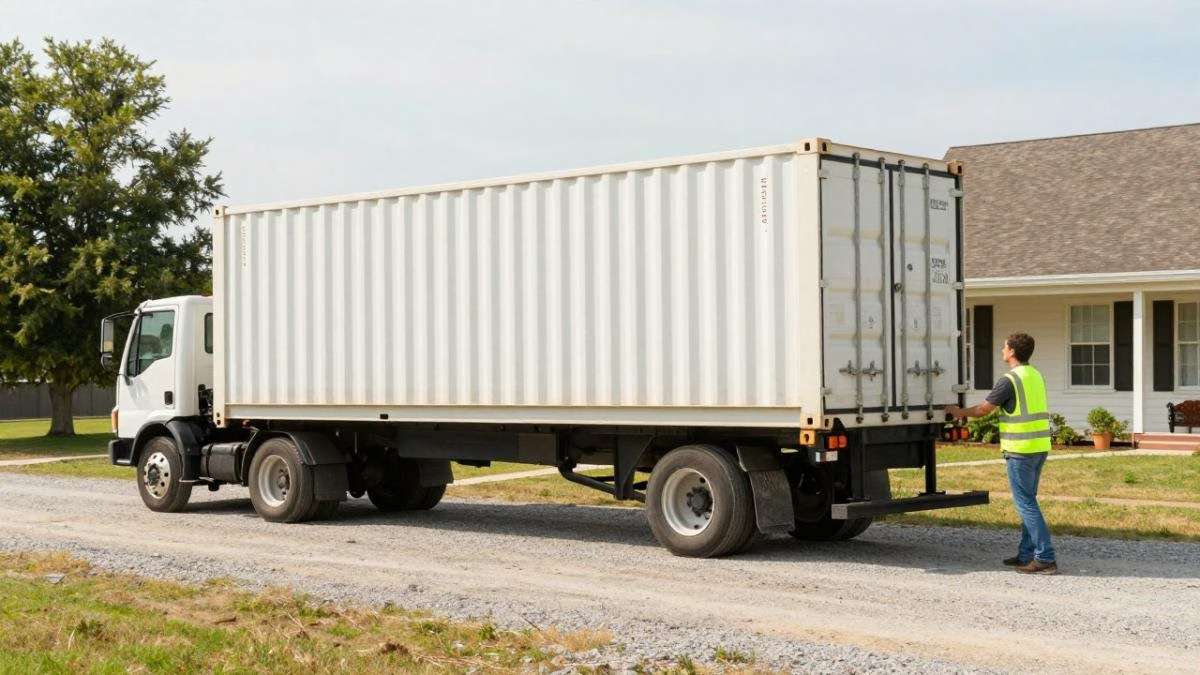
Delivery is where most rentals go sideways. A tilt-bed trailer needs firm ground, overhead clearance, and room to pull out after the container lands. Soft soil, low branches, or a narrow gate can stop a delivery cold.
Watch out: booking delivery before you walk the site is the fastest way to pay for a failed trip. We level shipping containers before placement, because an unlevel box can strain the doors over time.
If you are unsure whether a truck can reach your spot, check delivery across Waco and Central Texas and request a site review.
Mistake 3: Assuming Rent-to-Own Shipping Containers Work Like a Standard Lease
Rent-to-own builds toward ownership, so your payments work toward an asset you keep.
If your move is temporary, a short rental term makes sense. If you plan to keep storing tools or inventory after the move, a rent-to-own path toward ownership may suit you better.
Ask three questions before signing: What happens at the end of the term? Can I upgrade to a larger unit mid-term? Who handles delivery and pickup? Get the answers in writing. Read the rent-to-own program details to see how the terms work.
Before you book any container, confirm these points in the agreement:
- Minimum rental period: ask whether the rental carries a minimum term and how it is measured in days, weeks, or months.
- Extensions: confirm how to extend, how much notice is required, and whether the rate changes after the first term.
- Cancellation and rescheduling: ask what happens if your closing date moves or the delivery site is not ready.
- Damage and responsibility: clarify who is responsible for damage to the container and for the belongings inside.
- Delivery and pickup windows: confirm who schedules each trip and what access is required.
Read the terms carefully before you sign and keep a copy with your move paperwork.
Mistake 4: Skipping Custom Container Modifications for a Long-Term Move
A bare steel box works for a short move. It works poorly as a workshop, office, or long-term storage room. If the container will stay on your property for years, plan the modifications now rather than retrofitting later.
Common upgrades include insulation, electrical service, roll-up doors, windows, shelving, and paint. Contractors often convert a unit into a job-site office; homeowners add lighting and ventilation for a workshop.
What most guides miss is sequencing. Modifications should be planned before delivery, not after, because some work is easier on a level pad than in a crowded driveway. We make and build offices in containers. See the custom modification options for the full list.
Mistake 5: Forgetting That Ground Contact Ruins the Container and Your Belongings
Setting a container directly on dirt is the mistake we see most often. Moisture wicks up through the steel floor, rust starts at the base rails, and the doors stop closing square.
Containers need space off the ground so they do not settle. A firm, level, well-drained base keeps the steel dry and the doors aligned. Gravel, ties, concrete blocks, footings, and slabs all work when installed correctly.
Watch out: skipping the base to save time usually costs more in repairs within a couple of years. Learn what to put under a shipping container before your delivery date.
Mistake 6: Overlooking Security and Weather Protection for a Loaded Unit
A loaded container is a target and a moisture trap. Two habits prevent both problems. First, keep the cam locks clean and rust free, and lubricate the hinges so the doors seal tight. Second, inspect the door gaskets and roof seams before loading.
On the security side, a heavy-duty padlock on each door handle plus a lock box stops casual tampering. Park the unit where it is visible from the house or a neighboring building.
For weather, a coated steel roof and a raised base do most of the work. Inside, leave a small air gap along the walls so damp air can move. Check for leaks before you pay for any used unit; we repair damaged containers.
Requesting Your Container Rental Quote and Site Walkthrough
The right rental starts with a site visit, not a phone call. We walk the ground, check access, confirm the size, and level the unit on delivery. That sequence prevents nearly every mistake on this list.
K3 Containers keeps its own inventory at a lot in Eddy, just south of Waco, Texas, so you can choose your own container from the best used units. We also repair containers and make and build offices.
Request a quote from K3 Containers for a container that fits your load, your lot, and your timeline.
Frequently Asked Questions
How much does it cost to rent a moving container?
Container rental pricing depends on the unit size, rental period, delivery distance, and site conditions. A 20-foot container for a short local move costs less than a 40-foot unit kept for several months, and delivery fees vary with distance and access. For current prices and a quote, visit the K3 Containers website.
How do I prepare my site for a shipping container delivery?
Clear a level area at least as long as the container plus room for the truck to pull in and out. The surface should be firm, such as gravel, crushed rock, or concrete, and the container must sit off the ground on blocks or a pad so it does not settle. Check for overhead wires, low branches, and soft spots, and confirm the truck can turn around. A site walkthrough before delivery catches problems early.
What is the difference between a standard shipping container and a portable moving unit?
A standard shipping container is a steel cargo container built for freight, available in 20-foot and 40-foot sizes, and often sold or rented for storage and moving. A portable moving unit is typically a smaller, lighter container delivered by a moving company and moved between your old and new home. Standard containers hold more, cost less per square foot, and can be modified, but you arrange transport yourself. Portable units bundle delivery and transport into one service.
Are shipping containers weather-resistant for long-term storage?
A sound, wind-and-weather-tight container keeps rain and wind out, but used units vary in condition. Check door seals, floor integrity, and rust before loading anything valuable. Place the container level and off the ground so water drains away and doors keep working. K3 Containers grades containers based on their condition and repairs damaged containers.