


Central Texas Moisture Guide
Stop the source of moisture before it damages what you store.
Condensation, roof sweat, rain leaks, humid outdoor air, damp ground, and wet stored items require different solutions. Start by identifying which problem you actually have.
First: Identify the Moisture Source
- Condensation or roof sweat: droplets form on cold steel when humid air reaches the dew point.
- Rain leak: water enters through holes, roof damage, door seals, or repairs.
- Ground moisture: standing water, poor drainage, and limited airflow under the container keep the floor area damp.
- Moisture brought inside: wet equipment, green lumber, cardboard, furniture, feed, or recently washed items release moisture.
Place the Container Correctly
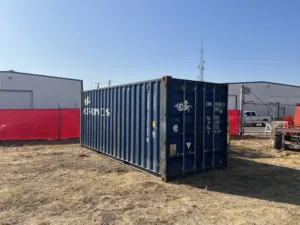
Use a firm, level, well-drained location. Elevate the container at its structural support points, preserve airflow underneath, and grade the site so water drains away. Avoid low areas where runoff collects. Good placement will not eliminate humidity, but it prevents many avoidable moisture problems.
Placement matters just as much: what to put under a shipping container covers drainage and airflow underneath.
Ventilation: Helpful, but Not Always the Whole Answer
Passive vents can reduce trapped heat and allow air exchange. Powered fans can move more air when electricity is available. However, on very humid Central Texas days, pulling outdoor air inside may add moisture. Ventilation works best when paired with good site drainage, dry stored items, appropriate spacing, and—when necessary—dehumidification or insulation.
Insulation and Thermal Bridging
Insulation reduces the temperature difference between indoor air and the steel shell. Closed-cell spray foam can provide insulation and air sealing when applied to clean, dry, properly prepared steel. Rigid foam and framed systems can also work, but gaps, exposed steel ribs, and incomplete coverage create thermal bridges where condensation may continue.
Do not place absorbent insulation directly against damp or rusting steel without a properly designed moisture-control assembly. Repair leaks and active corrosion before insulating.
Condition affects how much moisture you'll fight — see used shipping containers and what to look for in the door seals and roof.
Dehumidifiers and Desiccants
A correctly sized dehumidifier is often the most controllable option for valuable furniture, documents, tools, inventory, or climate-sensitive materials when power is available. Small disposable moisture absorbers may help in cabinets or very limited spaces, but they are usually not enough to control a serious humidity problem throughout a full 20- or 40-foot container.
Load the Container for Airflow
- Store only dry items.
- Keep cardboard and furniture away from steel walls.
- Use pallets or shelving to raise goods off the floor.
- Leave air paths instead of packing every space tightly.
- Avoid blocking vents.
- Inspect after major temperature swings and heavy rain.
Solutions by What You Store
Tools and equipment: control leaks, elevate equipment, allow airflow, and consider a dehumidifier for rust-sensitive items.
Furniture and household goods: use shelving or pallets, breathable covers, humidity control, and regular inspections.
Documents and cardboard: use sealed bins and active humidity control; cardboard readily absorbs moisture.
Feed or agricultural supplies: keep products dry, elevated, spaced, and protected from pests; verify that the storage method fits the product.
Maintenance Checklist
- Inspect roof, doors, seals, vents, lower rails, and floor edges.
- Remove standing water and improve drainage.
- Check for daylight through holes with the doors closed.
- Monitor humidity with a basic hygrometer.
- Replace saturated absorbers and service powered equipment.
- Address musty odors or mold promptly.
Need the right container for dry storage?
K3 can help you compare container condition, placement, ventilation needs, and delivery access in Waco and Central Texas.