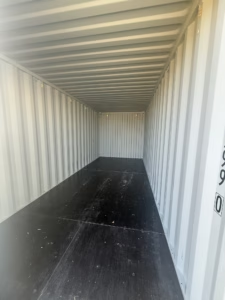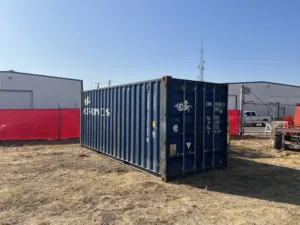



Container Insulation & Condensation Guide
The best insulation method depends on whether the container is simple storage, climate-controlled inventory, a workshop, or occupied space.
Heat, humidity, condensation, fire safety, interior space, cost, and code requirements must be considered as one system. This guide covers every common insulation method, spray foam in depth, and how to stop condensation and moisture.
Before You Insulate
Repair leaks, roof damage, door-seal problems, and active corrosion. Clean and dry the steel. Plan ventilation, electrical work, HVAC, framing, interior finishes, and penetrations before covering the shell.
Insulation Methods Compared
Closed-Cell Spray Foam
Best for: continuous air sealing around corrugated steel and condensation control.
Advantages: strong air seal, moisture resistance, high insulation value per inch, and good coverage around ribs.
Limitations: cost, difficult removal, interior-space loss, surface-preparation requirements, and possible need for an approved fire-protective covering. See spray foam in depth below.
Rigid Foam Board
Best for: projects needing predictable panel thickness and a framed or lined interior.
Advantages: clean installation, known insulation values, and multiple product options.
Limitations: seams, gaps, container ribs, and framing can create air leaks and thermal bridges unless carefully sealed.
Framed Batt Insulation
Best for: conventional framed interiors when moisture control is professionally designed.
Advantages: familiar installation and easy routing for utilities.
Limitations: fibrous insulation can lose performance when wet, and moisture can collect against the steel shell when the air and vapor-control layers are incomplete.
Mineral Wool
Best for: framed assemblies needing fire resistance and sound control.
Advantages: noncombustible material and good acoustic performance.
Limitations: still requires a properly designed air and moisture-control system and takes interior space.
Insulation eats into interior height, which is why many customers start with a 40-foot high cube container — the extra foot of headroom absorbs it.
Reflective Barriers
Reflective products can reduce radiant heat when installed with the correct adjacent air space. They are not a substitute for bulk insulation and do not provide their advertised performance when sandwiched tightly between solid layers without the required air gap.
Insulated Liner Systems
Specialized liners can provide a cleaner interior and varying levels of condensation or thermal control. Performance depends on material, thickness, attachment, sealing, and intended use. Review tested specifications rather than relying only on marketing terms.
Spray Foam in Depth
Spray foam can control heat, air leakage, and condensation, but only when the steel is prepared and the assembly is designed correctly.
Closed-Cell vs. Open-Cell Foam
Closed-cell spray foam is generally the more common choice directly against container steel because it provides higher insulation value per inch, resists moisture movement, and creates a strong air seal. Open-cell foam is lighter and more vapor-permeable. It can hold moisture and is usually less suitable directly against steel in condensation-prone applications unless the entire wall system is professionally designed.
Main Benefits
- Reduces heat transfer through the steel shell
- Limits humid indoor air from reaching cold steel
- Seals irregular ribs, seams, and small gaps
- Can reduce condensation when coverage is continuous
- Adds rigidity and adheres directly to prepared surfaces
Surface Preparation Comes First
Do not spray over active leaks, wet steel, oil, dirt, loose paint, heavy rust, or unknown contamination. Repair holes and roof damage, remove loose corrosion, clean and dry the surface, and follow the foam manufacturer’s temperature and preparation requirements. Foam can hide existing problems, making later repairs more difficult.
Fire and Occupancy Safety
Exposed spray foam can present fire and smoke hazards. Occupied offices, workshops, retail spaces, and living areas may require an approved ignition or thermal barrier, permits, ventilation, code-compliant exits, electrical review, and other life-safety measures. Consult qualified local professionals before converting a storage container into occupied space.
Potential Drawbacks
- Higher installation cost than simple liners
- Interior space is reduced
- Future welding or steel repair becomes more difficult
- Poor installation can trap moisture or leave gaps
- Overspray and chemicals require professional controls
- Removal is labor-intensive
Before Hiring an Installer
- Explain whether the space is storage or occupied.
- Confirm leaks and rust are repaired first.
- Ask what foam product and thickness will be used.
- Confirm how doors, roof, walls, and penetrations will be treated.
- Ask what fire-protective covering is required.
- Request ventilation and re-entry instructions.
Do Not Forget the Roof and Floor
The roof receives intense Texas sun and can be a major heat source. The floor can transfer heat, cold, and ground moisture. A complete design may include roof coatings or shade, ceiling insulation, insulated wall assemblies, and floor insulation appropriate to loads, door clearance, and moisture exposure.
Thermal Bridging and Thickness
Steel ribs, framing, fasteners, corners, doors, and penetrations conduct heat around insulation. Continuous coverage and careful detailing improve performance. Adding thick insulation between metal framing members does not eliminate heat flow through the framing itself.
Required thickness depends on use, climate, equipment, energy goals, and local code. Thin or uneven coverage can leave exposed ribs and steel paths that continue to conduct heat and form condensation. Doors, corners, floor edges, framing, and penetrations also need careful treatment.
Method Comparison
| Method | Moisture resistance | Space use | Complexity |
|---|---|---|---|
| Closed-cell spray foam | High when continuous | Low to moderate loss | Professional installation preferred |
| Rigid foam | Good when seams are sealed | Moderate | Detailed cutting and sealing |
| Batt or mineral wool | Depends on assembly | Higher | Framing and moisture design required |
| Reflective barrier | Not primary moisture control | Low | Requires correct air gap |
Stopping Condensation and Moisture
Condensation, roof sweat, rain leaks, humid outdoor air, damp ground, and wet stored items require different solutions. Start by identifying which problem you actually have.
First: Identify the Moisture Source
- Condensation or roof sweat: droplets form on cold steel when humid air reaches the dew point.
- Rain leak: water enters through holes, roof damage, door seals, or repairs.
- Ground moisture: standing water, poor drainage, and limited airflow under the container keep the floor area damp.
- Moisture brought inside: wet equipment, green lumber, cardboard, furniture, feed, or recently washed items release moisture.
Place the Container Correctly
Use a firm, level, well-drained location. Elevate the container at its structural support points, preserve airflow underneath, and grade the site so water drains away. Avoid low areas where runoff collects. Good placement will not eliminate humidity, but it prevents many avoidable moisture problems.
Placement matters just as much: what to put under a shipping container covers drainage and airflow underneath.
Ventilation: Helpful, but Not Always the Whole Answer
Passive vents can reduce trapped heat and allow air exchange. Powered fans can move more air when electricity is available. However, on very humid Central Texas days, pulling outdoor air inside may add moisture. Ventilation works best when paired with good site drainage, dry stored items, appropriate spacing, and—when necessary—dehumidification or insulation.
Insulation's Role in Condensation
Insulation reduces the temperature difference between indoor air and the steel shell. Closed-cell spray foam can provide insulation and air sealing when applied to clean, dry, properly prepared steel. Rigid foam and framed systems can also work, but gaps, exposed steel ribs, and incomplete coverage create thermal bridges where condensation may continue.
Do not place absorbent insulation directly against damp or rusting steel without a properly designed moisture-control assembly. Repair leaks and active corrosion before insulating.
Condition affects how much moisture you'll fight — see used shipping containers and what to look for in the door seals and roof.
Dehumidifiers and Desiccants
A correctly sized dehumidifier is often the most controllable option for valuable furniture, documents, tools, inventory, or climate-sensitive materials when power is available. Small disposable moisture absorbers may help in cabinets or very limited spaces, but they are usually not enough to control a serious humidity problem throughout a full 20- or 40-foot container.
Load the Container for Airflow
- Store only dry items.
- Keep cardboard and furniture away from steel walls.
- Use pallets or shelving to raise goods off the floor.
- Leave air paths instead of packing every space tightly.
- Avoid blocking vents.
- Inspect after major temperature swings and heavy rain.
Solutions by What You Store
Tools and equipment: control leaks, elevate equipment, allow airflow, and consider a dehumidifier for rust-sensitive items.
Furniture and household goods: use shelving or pallets, breathable covers, humidity control, and regular inspections.
Documents and cardboard: use sealed bins and active humidity control; cardboard readily absorbs moisture.
Feed or agricultural supplies: keep products dry, elevated, spaced, and protected from pests; verify that the storage method fits the product.
Maintenance Checklist
- Inspect roof, doors, seals, vents, lower rails, and floor edges.
- Remove standing water and improve drainage.
- Check for daylight through holes with the doors closed.
- Monitor humidity with a basic hygrometer.
- Replace saturated absorbers and service powered equipment.
- Address musty odors or mold promptly.
Choose by Use
Basic storage: begin with shade, placement, ventilation, and moisture control; full insulation may not be necessary.
Climate-sensitive inventory: use a continuous insulated and air-sealed system with properly sized HVAC or dehumidification.
Workshop: address heat, ventilation, electrical work, fire protection, and occupancy.
Office or occupied conversion: obtain local code, permit, engineering, life-safety, and energy guidance.
Want It Built for You?
K3 builds insulated custom containers and office containers in Central Texas. See our custom container builds, including our recent AUI Partners build, or our custom office containers.
Choose the container before choosing the insulation.
A sound roof, working doors, good seals, and appropriate condition make every insulation project easier.
Browse containers for sale to compare units.