


K3 Containers & Transport • Waco, Texas
Buying a used shipping container can save money, but condition, delivery access, container size, and seller credibility all matter. This guide explains what Central Texas buyers should inspect before purchasing a 20-foot or 40-foot container.
Quick Used-Container Buyer Checklist
- Choose between 20-foot and 40-foot sizes.
- Decide whether standard height or high cube is needed.
- Confirm the unit is wind- and watertight for storage.
- Inspect the roof, doors, seals, flooring, and underside.
- Include delivery in the total purchase price.
- Prepare a level placement area with truck access.
- Verify the seller owns the exact container being sold.
- Avoid unusual or irreversible payment demands.
1. Choose the Right Container Size
For most storage projects, the decision begins with a 20-foot or 40-foot container. The right choice depends on how much space you need, the layout of your property, and whether a delivery truck can safely reach the placement area.
| Container | Exterior Length | Exterior Height | Typical Uses |
|---|---|---|---|
| 20-foot standard | 20 ft | 8 ft 6 in | Residential storage, farms, tools, smaller job sites |
| 40-foot standard | 40 ft | 8 ft 6 in | Commercial storage, equipment, larger inventory |
| 40-foot high cube | 40 ft | 9 ft 6 in | Tall items, shelving, insulation, office or workshop projects |
High-cube containers provide one additional foot of height. That extra room can be useful for tall equipment, stacked inventory, shelving, insulation, lighting, and overhead systems. A standard-height container may still be the better value when vertical clearance is limited or the added height is unnecessary.
2. Match the Condition to the Intended Use
Container descriptions are not always used consistently by every seller, so ask what each term means and request current photos of the exact unit. Common descriptions include:
- One-trip: A newer container that has typically made one loaded trip. It usually has the cleanest appearance and longest remaining service life.
- Cargo worthy: Structurally suitable for cargo transport when properly certified. Cosmetic dents, scratches, or surface rust may still be present.
- Wind- and watertight: Intended to keep normal weather out and commonly used for on-site storage. It may not be certified for overseas shipping.
- As-is: Sold in its current condition. Repairs may be needed, and the buyer should inspect it closely.
- Salvage or scrap: Heavily damaged or corroded and generally unsuitable for secure storage without significant repair.
For most farms, construction sites, remodels, and business storage needs, the important questions are whether the container is structurally sound, the doors work correctly, and the roof, walls, and seals keep water out.
3. Inspect the Exact Container Before Buying
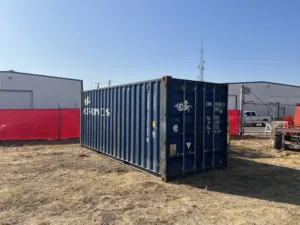
Do not rely only on a generic stock image. Inspect the exact container in person when possible, or request a full set of current photos and a video walkthrough.
Exterior and Structural Inspection
- Look for severe rust, holes, punctures, cracked welds, or bent structural rails.
- Check the roof for deep dents, bowed areas, or places where water may collect.
- Inspect corner posts, top rails, bottom rails, and the underside crossmembers.
- Make sure the doors are aligned and can be opened and closed without excessive force.
- Check hinges, locking bars, handles, and the lockbox if one is installed.
Interior Inspection
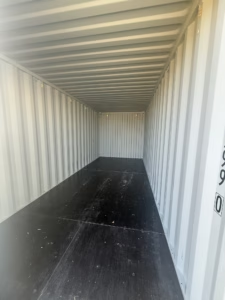
- Step inside and close the doors. Visible daylight may reveal holes or damaged seals.
- Inspect the floor for soft spots, rot, deep gouges, chemical stains, or strong odors.
- Check the ceiling and walls for active leaks, heavy corrosion, mold, or previous repairs.
- Inspect door gaskets for cracks, missing sections, or areas that do not seal.
- Confirm vents are open and undamaged. Ventilation—not extra height alone—helps control moisture and condensation.
If you cannot inspect the container personally, ask whether the photos show the exact unit or only a representative example. Also request the container identification number and written confirmation of the condition being sold.
Ask K3 About Current Inventory
Request current photos, container condition details, and delivery pricing before making a decision.
Request Information4. Plan for Delivery Before You Purchase
The lowest advertised container price is not always the lowest delivered price. Delivery cost depends on container size, distance, property access, truck type, and placement conditions.
Before scheduling delivery, consider:
- Straight-line access: The truck needs enough room to enter, position, unload, and exit.
- Gate and driveway width: Narrow gates, tight turns, ditches, and soft shoulders can prevent access.
- Overhead clearance: Check for trees, utility lines, roof overhangs, and other obstacles.
- Ground conditions: Mud, sand, steep grades, and saturated ground can make placement unsafe.
- Door direction: Decide which way the doors should face before the truck arrives.
- Placement supports: A level base with suitable support points helps the doors remain aligned and improves drainage.
- Future access: Leave room to open the doors fully and reach the container with vehicles or equipment.
K3 provides container delivery and transport support throughout Waco and Central Texas. Review the delivery area and send the address, container size, and access details when requesting a quote.
5. Compare the Total Cost—not Just the Container Price
When comparing sellers, include the container price, delivery charge, taxes, site preparation, repairs, modifications, and any equipment needed after delivery. A cheaper as-is container may cost more in the long run if the floor, doors, roof, or seals require repair.
Ask each seller for a written quote describing:
- The exact size and condition
- Whether photos show the exact container
- Delivery cost and placement assumptions
- Payment terms
- Any warranty or condition guarantee
For temporary storage, a purchase may not be necessary. K3 also offers container rental options for job sites, remodels, farms, businesses, and inventory overflow.
6. Avoid Used-Container Scams
- A price far below the normal local market
- A seller who refuses an inspection or current photos
- Stock photos instead of the exact container
- Payment requested through gift cards, cryptocurrency, or an unrelated person
- No verifiable business address, phone number, or ownership documentation
- Unexpected delivery charges added after payment
Verify who owns the container and who is receiving payment. Ask for a written invoice and confirm that the seller can identify the exact container being sold. Learn more in K3’s guide to avoiding scams when purchasing used cargo containers.
7. Think About Modifications and Moisture Control
Windows, personnel doors, shelving, insulation, electrical service, lighting, and climate control can make a container more useful, but each modification adds cost and may affect the structure. Plan the project before choosing the container condition and size.
Central Texas heat and humidity also make moisture control important. Good drainage, airflow, proper storage practices, vents, insulation, and climate control can help reduce condensation. Read more about preventing condensation in shipping containers.
Final Used-Container Buying Checklist
- Identify what will be stored and for how long.
- Choose a 20-foot, 40-foot, standard, or high-cube container.
- Decide whether you need one-trip, cargo-worthy, wind- and watertight, or as-is condition.
- Inspect the exact container or request complete current photos and video.
- Verify the roof, floor, doors, seals, structure, and underside.
- Confirm ownership and obtain a written quote.
- Evaluate the delivery route and placement area.
- Compare the total delivered cost, not only the advertised price.
- Plan for drainage, ventilation, security, and modifications.
- Work with a seller who communicates clearly and stands behind the stated condition.
Ready to Buy a Shipping Container?
The right used shipping container should match your storage needs, budget, property access, and expected service life. K3 Containers & Transport supplies and delivers containers throughout Waco and Central Texas.