


Technical Size Reference
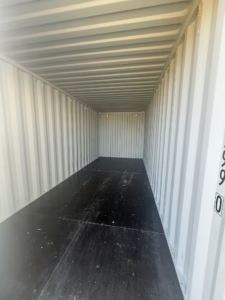
Nominal container size is not the same as usable interior or door-opening space.
Use this chart for planning, then confirm the measurements and rating plate of the exact unit before loading oversized or heavy items.
Typical Container Dimensions
| Type | Exterior | Approx. interior | Approx. door opening | Floor area |
|---|---|---|---|---|
| 20-ft standard | 20' L × 8' W × 8'6" H | About 19'4" L × 7'8" W × 7'10" H | About 7'8" W × 7'5" H | About 148 sq. ft. |
| 40-ft standard | 40' L × 8' W × 8'6" H | About 39'5" L × 7'8" W × 7'10" H | About 7'8" W × 7'5" H | About 304 sq. ft. |
| 40-ft high cube | 40' L × 8' W × 9'6" H | About 39'5" L × 7'8" W × 8'10" H | About 7'8" W × 8'5" H | About 304 sq. ft. |
Measurements vary by manufacturer, age, door design, repairs, and unit. Confirm the exact container before relying on any published chart.
Why Door Opening Matters
An item can fit inside the container and still fail to pass through the cargo doors. Measure the item’s widest, tallest, and longest points, including pallets, packaging, wheels, handles, and lifting equipment. Allow clearance for turning and safe handling.
Nominal vs. Actual Size
“20-foot” and “40-foot” are nominal exterior lengths. Interior dimensions are reduced by walls, framing, doors, and floor construction. High cube refers mainly to the additional exterior and interior height—not additional width.
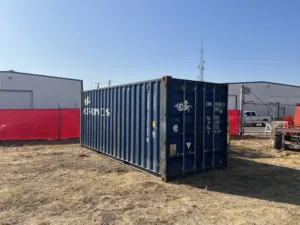
Compare the real thing: 20-foot, 40-foot, and 40-foot high cube containers.
Weights and Payload
Tare weight, maximum gross weight, and payload vary by unit. Read the door markings and CSC plate when weight matters. A container floor also has point-load limits; heavy machinery should be evaluated for weight distribution rather than total weight alone.
Delivery Footprint
The container dimensions do not describe the space needed by the delivery truck. The driver may need substantial straight-line distance, turning space, overhead clearance, firm ground, and a clear exit path. A 40-foot container generally requires more delivery room than a 20-foot unit.
Planning Checklist
- Measure the largest item and the door opening needed.
- Allow space for shelving, aisles, and retrieval.
- Confirm standard or high-cube height.
- Review exact tare and gross ratings when loading heavy cargo.
- Measure the site, gate, overhead obstructions, and unloading path.
- Confirm door orientation before delivery.
Need help confirming size and access?
Send K3 the delivery address and what you plan to store.